


OJJDP News @ a Glance, April 2024
The April newsletter highlights the role an educational advocate plays in helping youth reengage with the education system following residential placement and two grantees under OJJDP’s new Building Local Continuums of Care To Support Youth Success initiative.
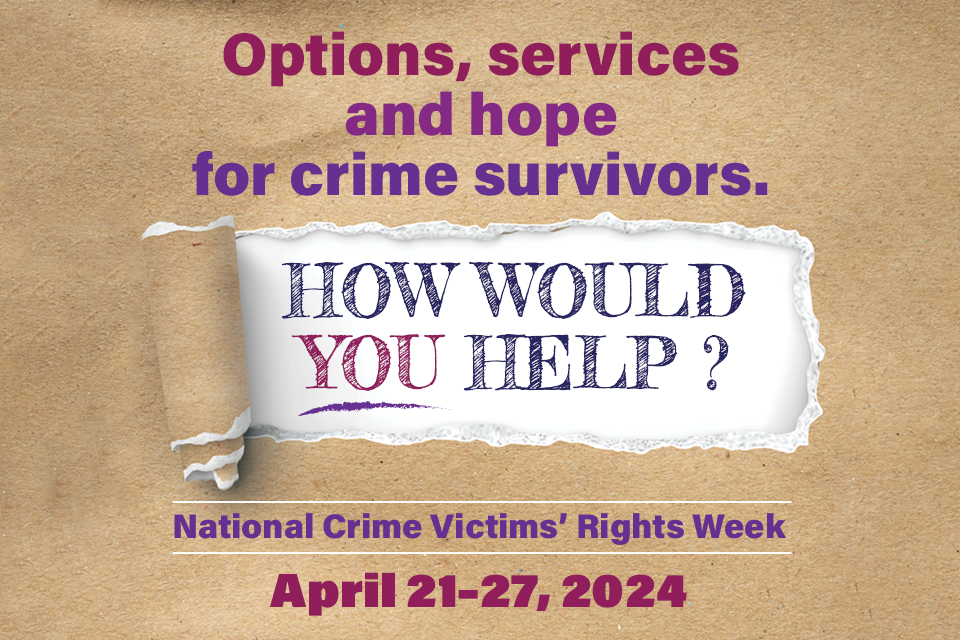
2024 National Crime Victims’ Rights Week Resource Guide
The 2024 NCVRW Resource Guide is now available! It includes information to help you plan your outreach, original artwork, and other tools to help raise awareness about victims’ rights and services.
Term of the Month - Wrongful Convictions
Wrongful convictions occur when innocent people are convicted of crimes committed by others or are found guilty even though a crime was not committed. Research estimates suggest the wrongful conviction rate in the United States is less than 5%.
Focus on the National Public Safety Partnership
Coordinated by the Bureau of Justice Assistance (BJA), the U.S. Department of Justice's National Public Safety Partnership helps communities experiencing significant violent crime challenges to strengthen their capacity to reduce crime. Learn more in the latest issue of BJA’s Justice Matters newsletter.
Grant Application Resource Guide
This resource contains information to help you prepare and submit applications for OJP funding and offers guidance on award administration.
Learn about JustGrants, DOJ's Grants Management System
Access information about JustGrants, including news updates, resources and training opportunities for applicants and recipients of DOJ grant awards, and other forms of federal financial assistance.